
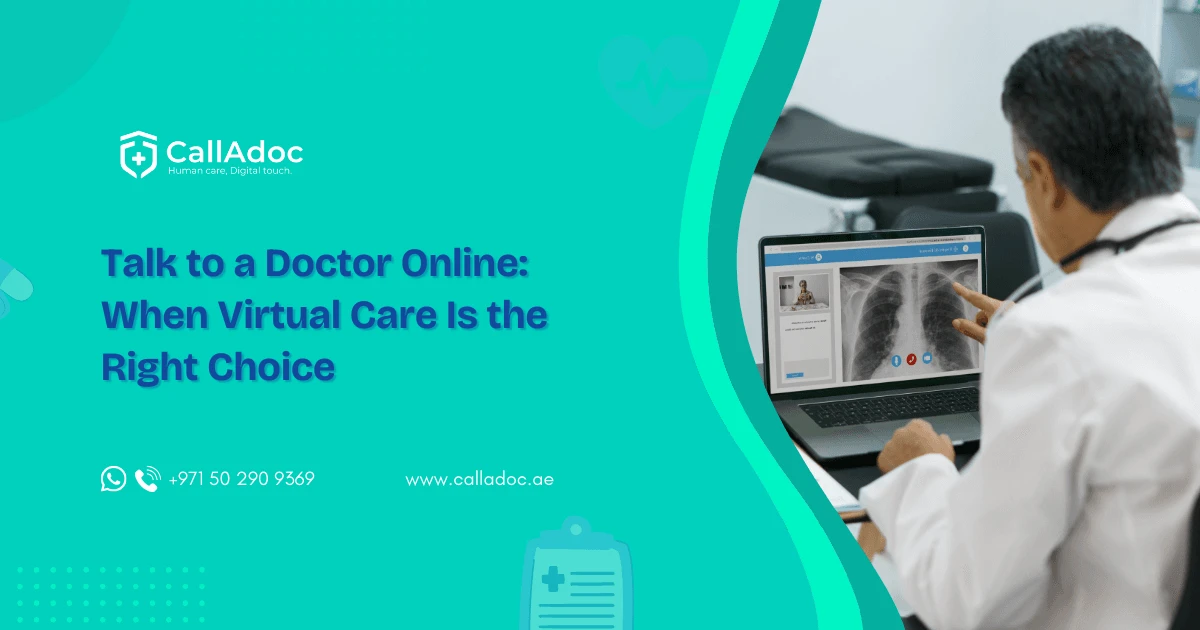
A few years ago, the idea of talking to a doctor online felt unusual. Many people believed proper medical care could only happen inside a clinic. Today, that thinking has changed—and for good reason. Virtual care has quietly become part of everyday healthcare, especially for people who value time, clarity, and convenience.
But online consultations aren’t meant to replace every doctor visit. The real question is this: when is virtual care actually the right choice?
From what doctors see daily, the answer is more often than most people expect.
Why People Are Turning to Online Doctor Consultations
Most online consultations don’t start with emergencies. They start with uncertainty.
A fever that begins late at night.
A rash that appears suddenly.
A report you don’t understand.
A medication doubt that keeps you anxious.
In these moments, people don’t always need a hospital. They need answers.
Talking to a doctor online fills that gap. It gives you professional guidance without the pressure of travel, waiting rooms, or rushed conversations. For many patients, this first step alone brings relief.
When Virtual Care Makes the Most Sense
Online consultations work best when clarity, speed, and guidance are more important than physical procedures. Over time, doctors have noticed clear patterns in when virtual care helps the most.
Minor Illnesses and Sudden Symptoms
Conditions like fever, cold, cough, sore throat, stomach discomfort, body pain, rashes, or fatigue are among the most common reasons people talk to a doctor online.
In many cases, these issues can be assessed through symptoms, history, and visual checks. Doctors can guide treatment, prescribe medication when appropriate, and clearly tell you when an in-person visit is needed.
This early guidance often prevents symptoms from getting worse.
Follow-Ups and Ongoing Conditions
For people managing diabetes, blood pressure, thyroid issues, or other chronic conditions, regular follow-ups are essential. But repeated clinic visits can be tiring and time-consuming.
Virtual care allows doctors to review readings, reports, and progress without disrupting daily life. Patients stay consistent with care because it fits into their routine, not against it.
Consistency, in most cases, matters more than location.
Report Reviews and Second Opinions
One of the most underrated uses of online consultations is report review.
Many patients receive lab results and feel confused. Numbers look abnormal. Medical terms sound alarming. Anxiety builds quickly.
Talking to a doctor online to review reports helps patients understand what actually matters, what needs attention, and what doesn’t. Sometimes, reassurance is the most important treatment.
Mental Health and Stress-Related Concerns
Stress, anxiety, poor sleep, burnout, and emotional fatigue don’t always require physical exams—but they do require attention.
Virtual consultations provide a private, comfortable space for patients to talk openly. Many people feel more relaxed discussing mental health concerns from their own home, which often leads to better outcomes.
For doctors, this openness makes care more effective.
When Virtual Care Is Not Enough
It’s important to be honest about limitations.
Online consultations are not suitable for medical emergencies like severe chest pain, breathing difficulty, major injuries, heavy bleeding, or sudden neurological symptoms. In such cases, immediate in-person care is essential.
A good online doctor will never hesitate to direct a patient to emergency services when needed. Virtual care works best when it complements—not replaces—physical care.
Why Patients Often Prefer Online Consultations
From a doctor’s perspective, online consultations change the tone of care.
Patients are calmer.
They feel heard.
They ask better questions.
There’s less rush, less stress, and fewer distractions. Conversations focus more on understanding and less on logistics. For many patients, this leads to clearer decision-making and better follow-through.
Doctors also notice that patients who start with virtual care are more informed and confident if they later need in-person treatment.
How to Know If Virtual Care Is Right for You
A simple rule helps:
If your concern is about symptoms, advice, follow-up, reports, or guidance—and not a physical procedure—virtual care is usually a good first step.
It saves time.
It reduces anxiety.
And it often prevents unnecessary clinic visits.
When used correctly, online consultations don’t distance patients from care. They bring care closer.
Final Thoughts
Healthcare doesn’t always need four walls and a waiting room. Sometimes, it just needs a qualified doctor, a clear conversation, and the right guidance at the right time.
Talking to a doctor online is not about convenience alone. It’s about making healthcare more responsive to real life—busy schedules, late nights, and everyday health concerns that deserve attention.
If you’re unsure whether to wait, worry, or act, virtual care is often the smartest first step.